


The best racking systems are those that precisely match a company's needs, the type of goods stored and the conditions in which they will be used. The specific requirements of the business must therefore be considered when planning a warehouse storage system.
For example, warehouses with a large number of product lines require fast access to every pallet, while storage capacity takes priority when large volumes of uniform goods are involved. In an archive, the key consideration is the number of shelves that can be accommodated per square metre. At a steel stockholding facility, it is the ability to store long loads safely.
If these differences are overlooked, even the best racking systems will be used inefficiently.
For this reason, a meaningful ranking of racking types is not a scale from best to worst. Instead, it highlights the most effective solutions for different storage requirements.
Racking quality and reliability
When choosing a racking system, it is important to consider not only the specifications of each individual bay but also the reliability of the manufacturer. Load calculations, layout design, steel quality, manufacturing accuracy and professional installation directly affect storage capacity, the speed of warehouse operations, product safety and business continuity.
FORSTOR is a Ukrainian manufacturer of metal racking systems and one of the top three companies in the country's industry. Over 17 years, we have completed more than 12,000 projects for 7,000 clients and equipped over 3,000 warehouses with racking systems. FORSTOR's clients include ATB, Rozetka, Nova Poshta, JYSK, Epicentr, PrivatBank, PUMB and other leading Ukrainian and international companies.
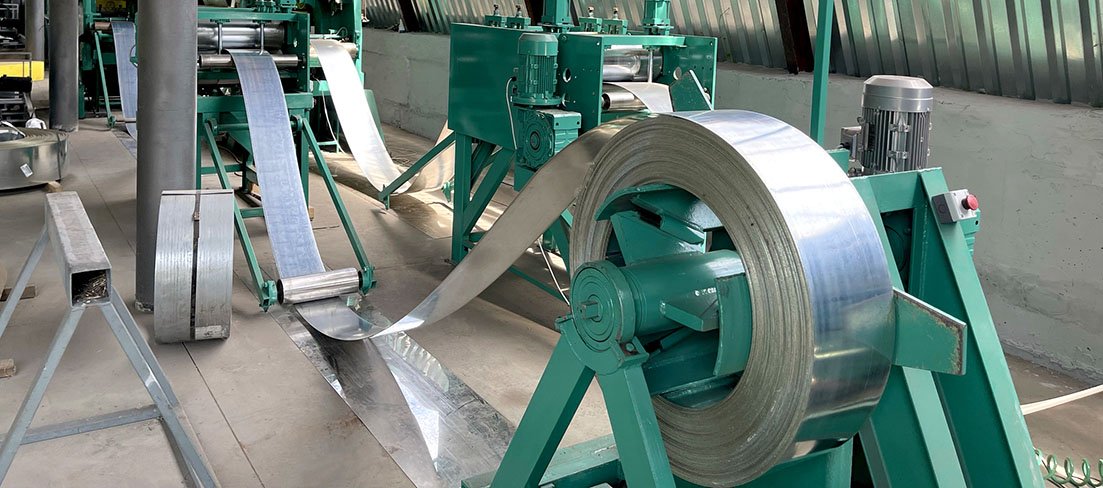
Our in-house design department and manufacturing facility in Dnipro operate as part of a single production cycle. This reduces design lead times, streamlines the approval of technical solutions and helps us meet agreed manufacturing deadlines. Our engineers work directly with the production team, ensuring that the finished components meet the design specifications and that the installed racking system performs exactly as intended in the calculations.
To determine which racking system is best suited to your business, prepare a floor plan, load specifications and details of the material handling equipment in advance. This information makes it possible to compare several layouts and select the solution that offers the best balance of capacity, operational convenience and cost.
What criteria were used to compile the ranking?
This article presents the top 10 metal racking systems offered by FORSTOR for a wide range of operating conditions, from compact storage of boxes and documents to large pallet warehouses. For each system, we outline its key advantages, applications and the factors to consider before placing an order.
We assessed storage capacity, stock accessibility, picking speed, compatibility with material handling equipment, configuration flexibility and safety. This approach helps identify the best option for a particular warehouse, retail outlet, archive or manufacturing facility.
1: Profi selective pallet racking
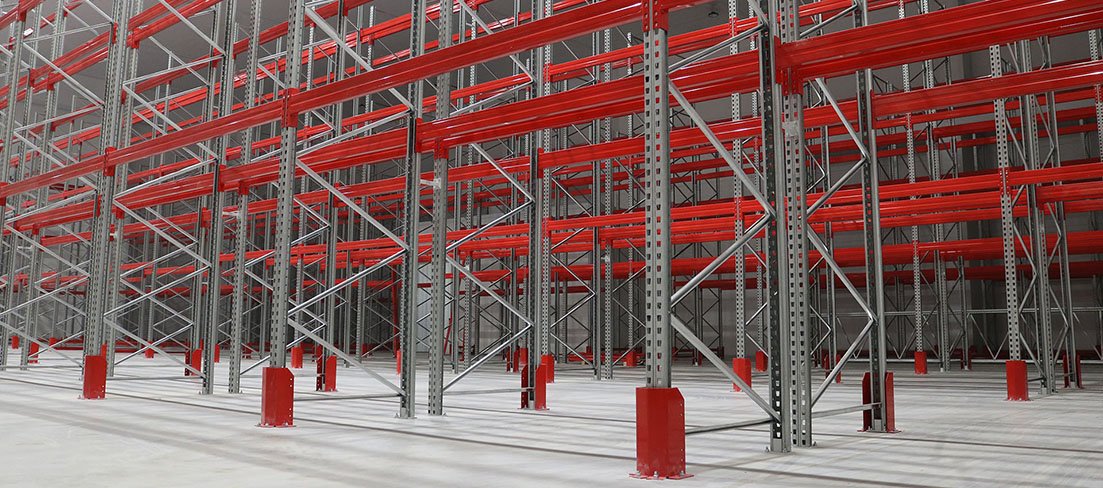
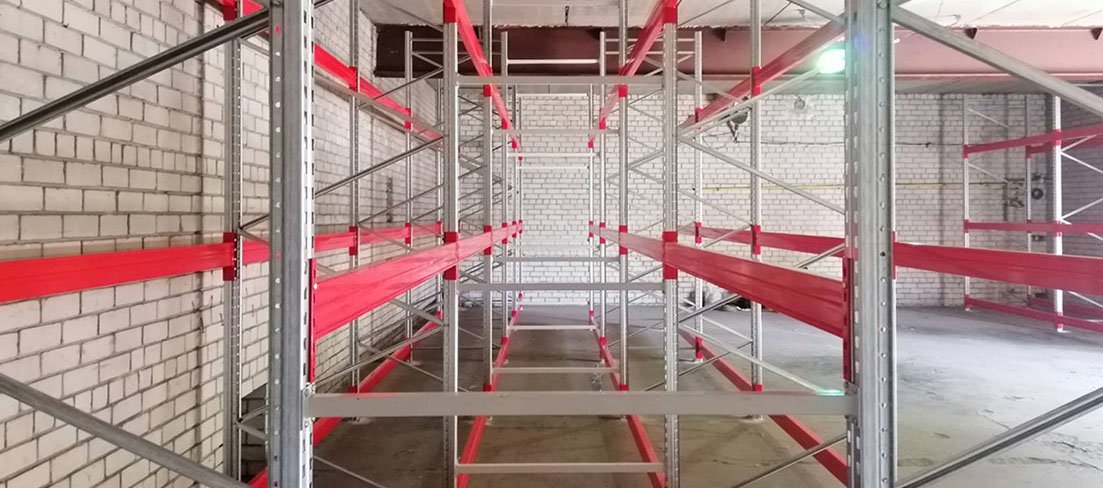
Profi selective pallet racking leads our ranking of professional racking systems because of its versatility. It is suitable for most palletised goods, provides direct access to every pallet and can be scaled with ease. The beam levels can also be adjusted to suit the height of the load.
Depending on the configuration, each upright frame can support up to 18,000 kg, while a pair of beams can carry up to 4,500 kg. The structure can be up to 12.5 metres high.
Profi racking is an effective solution for warehouses with a wide product range, frequent dispatches and regular changes to the product mix. Typical applications include logistics centres and warehouses with a large number of SKUs.
2: Profi Drive-In racking
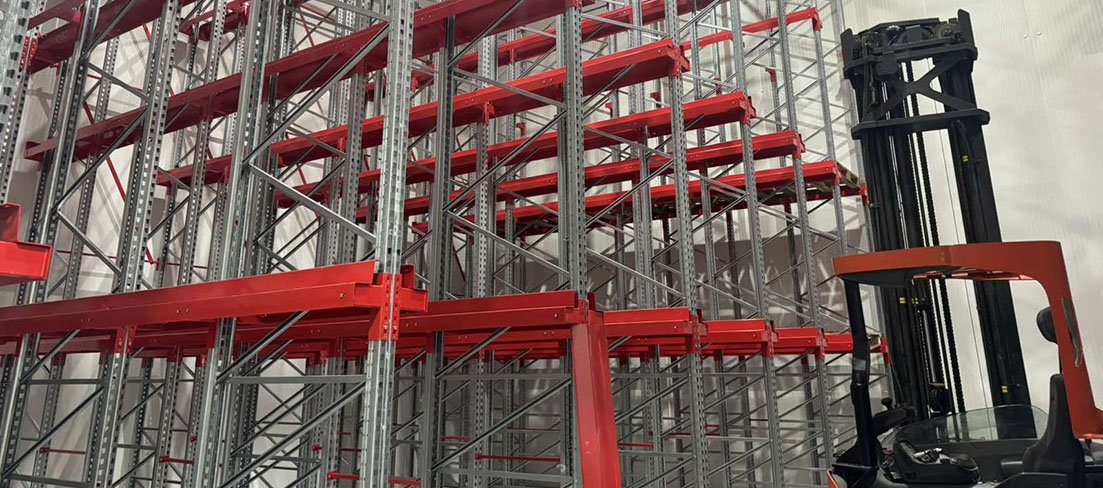
Profi drive-in racking is one of the best solutions for high-density storage of uniform goods. No aisles are required between the rows: a forklift enters the storage lane and places the pallets on support rails.
A single-entry configuration operates on the LIFO principle: the last pallet loaded is the first one retrieved. It is therefore generally used to store uniform goods. In a drive-through configuration, the storage lane can be accessed from both ends. Pallets are loaded from one side of the rack and retrieved from the other. The first pallet is placed at the far end of the lane, closest to the dispatch side, and subsequent pallets are positioned behind it in sequence. As a result, the stock received first is also the first to become available for dispatch, meaning that the system operates on the FIFO principle.
Profi drive-in racking is an excellent choice for cold stores, seasonal stock and large batches of standardised products.
3: Profi cantilever racking
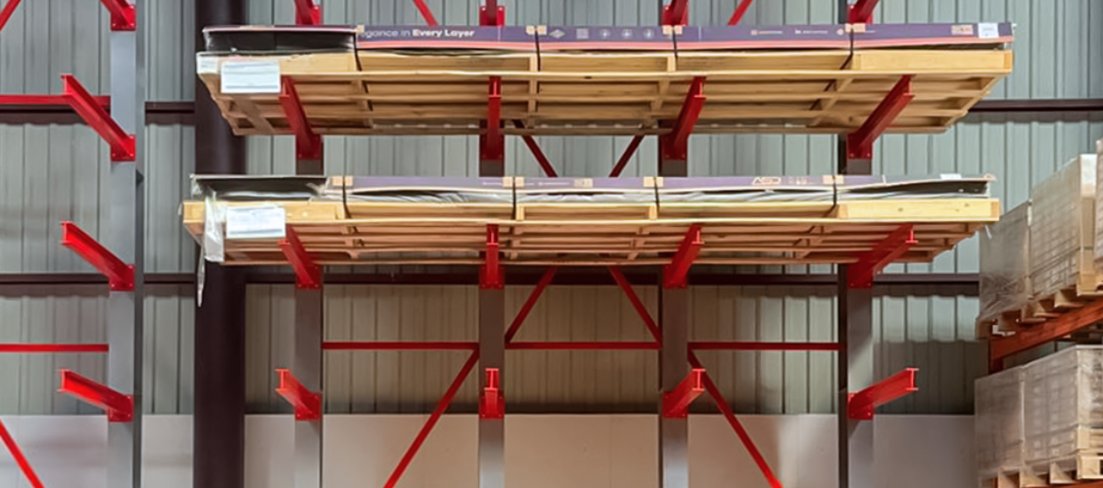
Profi cantilever racking is a specialist solution for long loads.
Pipes, rolled steel, timber, profiles and materials supplied in rolls are stored on cantilever arms. When cylindrical products need to be stored, the arms can be fitted with special end stops to prevent them from rolling off.
Single-sided structures are installed along walls, while double-sided structures are positioned in the centre of the warehouse. The height of the cantilever arms can be adjusted to the actual dimensions of the goods.
Racking for long goods is essential for furniture manufacturers, woodworking companies, steel stockholders, builders' merchants and construction material warehouses. It is the most effective solution for safely storing long loads.
4: Profi double-deep pallet racking
Double-deep pallet racking consists of two selective rack rows installed back to back. By reducing the number of aisles required, it can accommodate approximately 35% more pallets than a standard selective racking system.
These racking systems provide direct access to the front pallets. A reach truck or forklift with telescopic forks is required to handle pallets in the second row. The system therefore performs best when at least two pallets of each SKU are held in stock.
This is an effective format for high-throughput warehouses with a relatively limited number of SKUs and a stock level of at least two pallets per SKU.
5: Profi gravity-flow racking
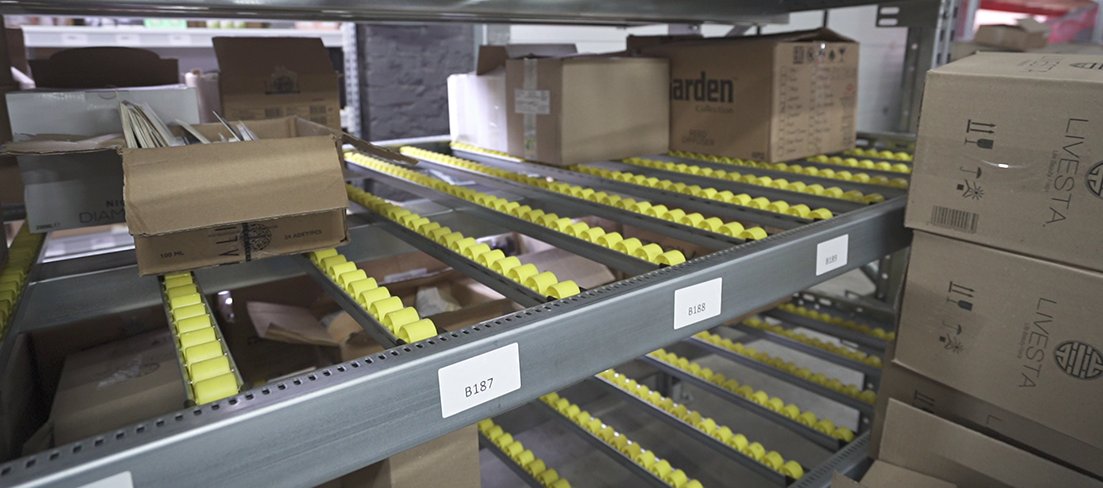
In a Profi gravity-flow system, pallets or boxes travel along roller tracks from the loading side to the picking side. The rollers, gradient and braking components are engineered for the specific load and packaging type.
This is one of the best racking types for goods where dispatch sequence is important: the batch received first is also the first one retrieved. Gravity-flow systems streamline product sorting and order picking while helping businesses manage product shelf life.
This solution is particularly effective in food, pharmaceutical and cosmetics warehouses.
6: Profi combination racking
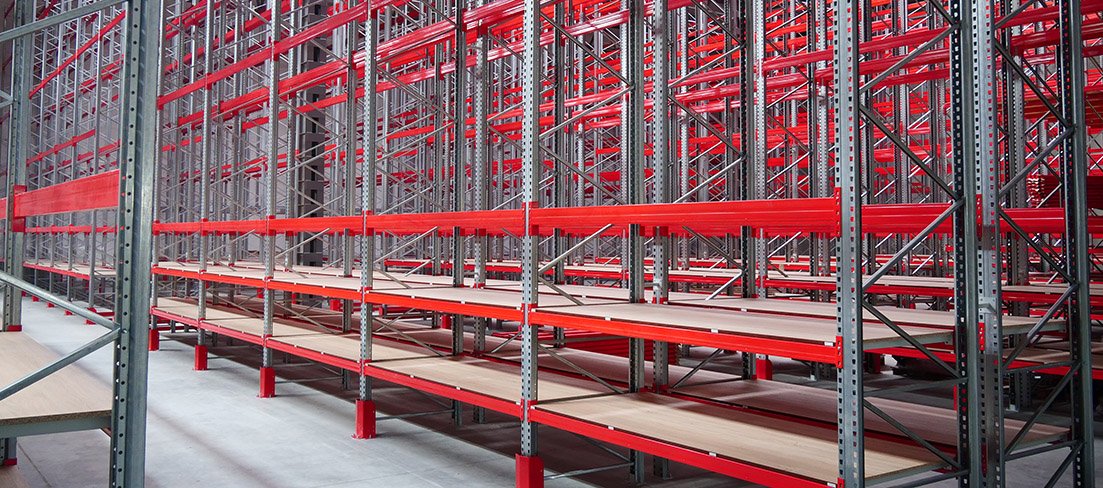
Profi combination racking incorporates pallet levels and solid shelves within a single system. Reserve stock is stored on pallets at the upper levels, while boxes or individual items for manual picking are placed on the lower shelves. A single rack row therefore serves simultaneously as a storage area and as an order-picking or product display zone.
It is a practical solution for cash-and-carry stores, wholesale warehouses and order pick-up points.
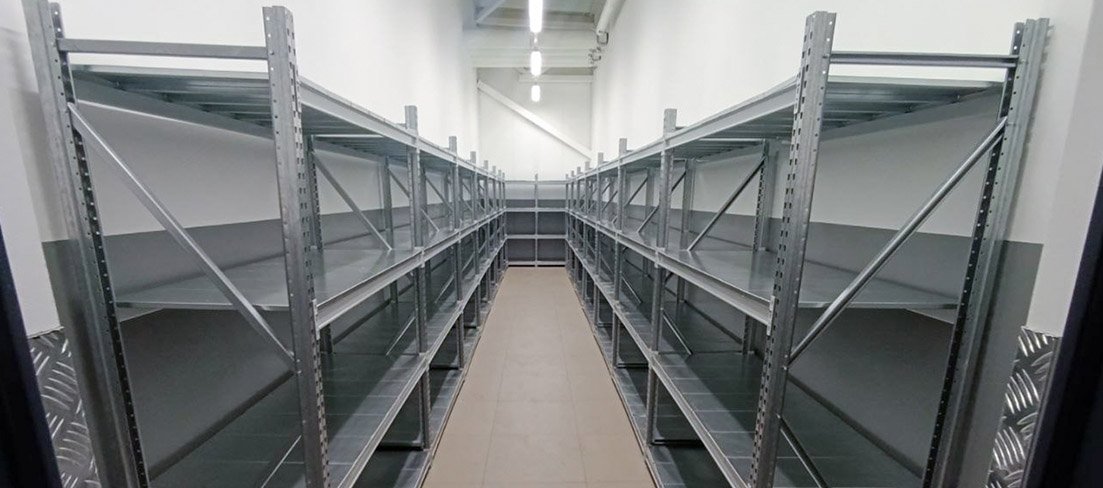
7: Master shelving
Master shelving is designed to support loads of up to 400 kg per shelf and up to 2,500 kg per bay. It is used for boxes, components, tools, automotive parts and manufacturing supplies that are picked manually by warehouse staff.
The system features a boltless, hook-in assembly. Shelves are available in either steel or chipboard, and their height can also be adjusted.
Master shelving is best suited to spare parts warehouses, workshops, manufacturing facilities and manual order-picking areas.
8: Start shelving
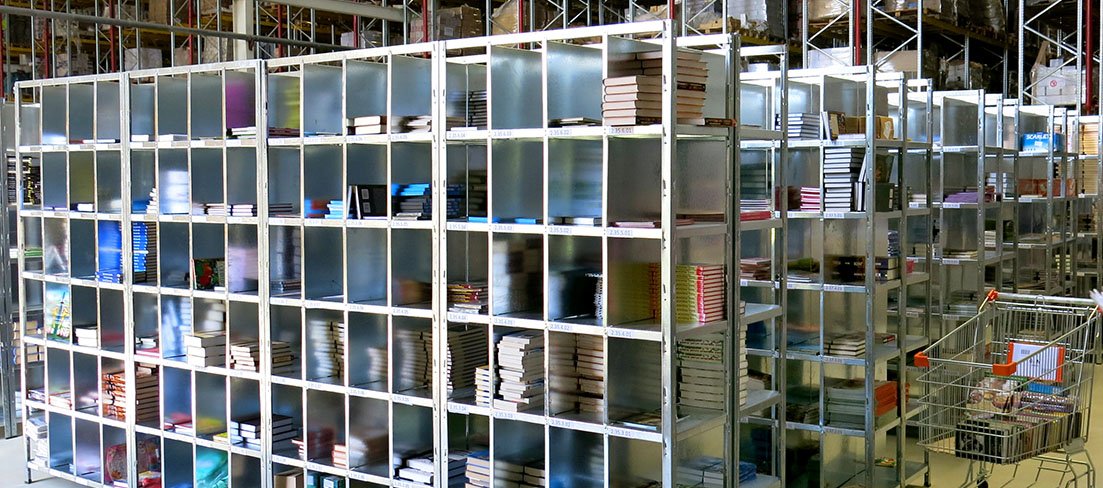
Start shelving is one of the most popular configurations for storing documents, boxes, tools and small items. Each shelf can support up to 175 kg, and the structure can be up to 3 metres high.
The uprights and shelves use hook-in connections, allowing the unit to be assembled and reconfigured quickly without bolts. The all-steel construction is ideal for environments that require a combination of durability, hygiene and ease of maintenance.
Start shelving is an excellent choice for offices, archives, small warehouses and shops.
9: Multirack shelving
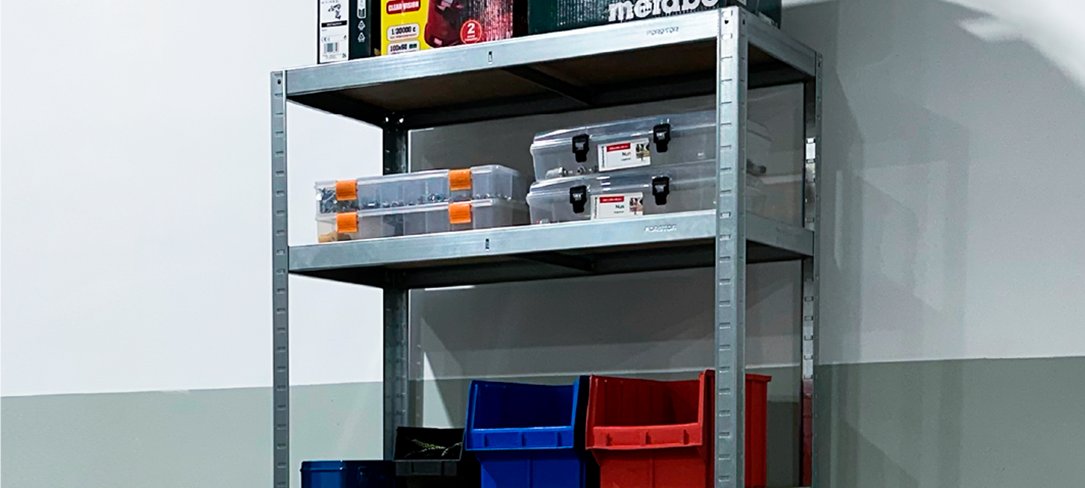
Another versatile range included in this ranking is Multirack. These simple and reliable boltless shelving units are suitable for both commercial and household use.
Each shelf can support up to 175 kg, with a maximum load of 875 kg for the entire unit. The shelves can be repositioned, allowing the configuration to be adapted easily to goods of different sizes. Shelves are made from either chipboard or MDF.
In residential settings, Multirack shelving is ideal for storerooms, garages and workshops. It is also widely used by businesses, for example in retail and storage areas, back rooms and similar spaces.
10: Multi-tier racking
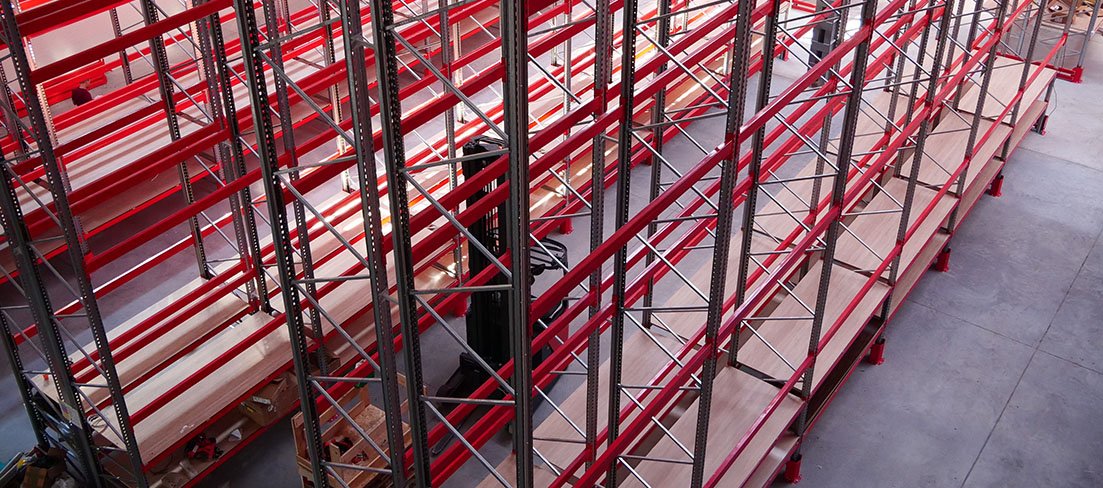
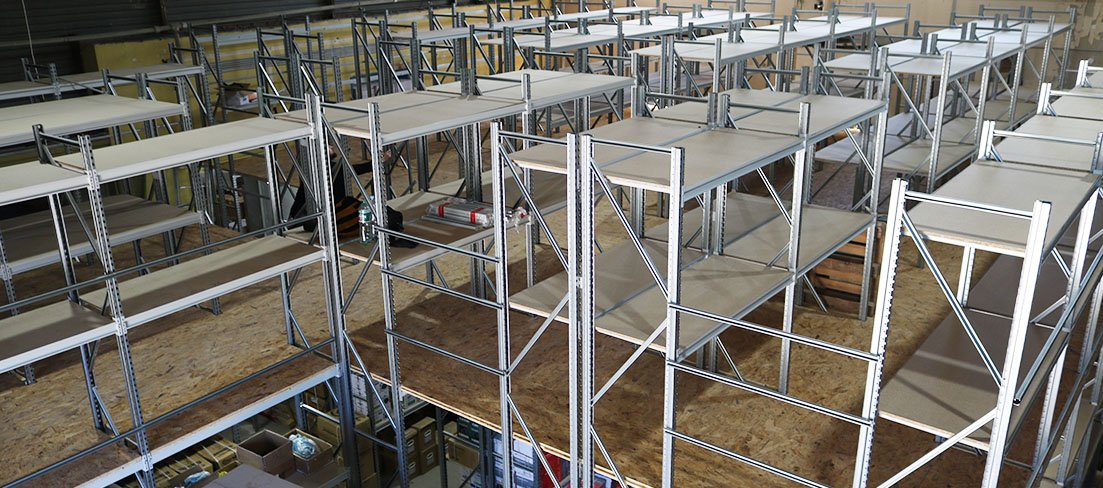
Multi-tier racking, also known as warehouse mezzanine racking, completes our ranking. These structures create several storage levels and make it possible to use not only the floor area but also the full available height of the building.
Each mezzanine level can be configured as a separate storage zone. Stairs, goods lifts, conveyors or material handling equipment are used to move products between levels. Depending on the configuration, a multi-tier structure can be up to 15 metres high, while the permissible deck load can be as much as 1,000 kg/m².
Mezzanine racking is best suited to high-bay warehouses storing spare parts, components, tools, fasteners, pharmaceuticals and other individual items. It is one of the most effective ways to increase usable warehouse space without extending the building itself.
How to choose the best racking system from the ranking
The selection process should begin not with the price per bay, but with the number of SKUs, the maximum stockholding level, the weight and dimensions of each unit load, and the required picking speed. These details make it possible to determine the appropriate racking type, calculate the required number of bays or pallet positions, and organise access to the goods correctly.
- For pallet storage, you need to know the pallet standard, its loaded height and its actual weight. These parameters determine the depth of the frames, the spacing between beam levels and the permissible load at each level.
- For shelving systems, the type and dimensions of the packaging, the weight of the products and the picking method must be considered. These parameters determine the shelf dimensions and material, the number of levels and the aisle width required for staff.
- For mezzanine storage, the same product and packaging parameters used for shelving systems must be considered, together with the available clear height of the building. The load-bearing capacity of the floor must also be verified during the design process, and the method used to move goods between levels must be defined.
Effective warehouse planning must also take account of the usable clear height, column spacing, loading doors, fire access routes, utilities and floor condition. If material handling equipment is used in the warehouse, the mast lift height, turning radius and required aisle width must also be checked during the design process.
To obtain a properly substantiated calculation, contact FORSTOR's specialists and provide a floor plan, load specifications and details of your material handling equipment. Our engineers will develop layout options and recommend the racking system best suited to your company's operational requirements.